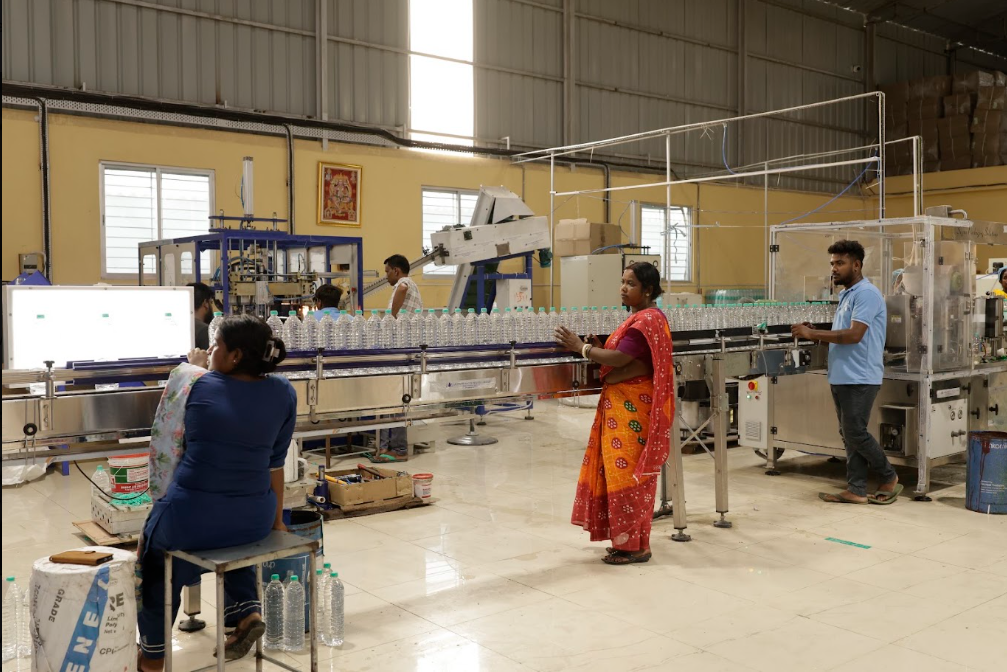
In the packaged drinking water manufacturing business, profitability is closely linked to production efficiency, manpower utilisation and cost per bottle. While choosing a smaller plant may appear attractive because of its lower initial investment, businesses planning for long-term growth should also consider how much they can produce with the same workforce and operating expenses.
A high-capacity mineral water plant can provide an important advantage by increasing output while reducing the cost of production per unit.
Higher Production with Better Cost Efficiency
The key benefit of a high-capacity plant is its ability to produce more bottles within the same operating period. When production increases without a proportional increase in manpower, the labour cost allocated to each bottle can decrease.
This becomes particularly important when comparing different production capacities. A 40, 60 or 90 BPM line may be suitable for businesses with limited demand, but a 120 BPM fully automatic production line can offer significantly greater output for businesses targeting larger markets.
The objective is simple: produce more with the same or proportionately lower operating resources.
Automation Can Reduce Manpower Requirements
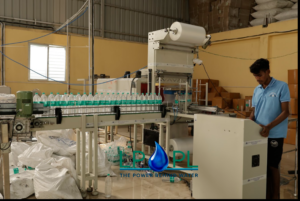
Modern fully automatic machinery can minimise manual intervention throughout the production process. Lalita Projects’ fully automatic PET blowing machines are designed for high-speed production with minimal manpower, while features such as servo-controlled operation and automatic preform loading improve efficiency. The machines are available in configurations ranging from approximately 2,000 to 12,000+ bottles per hour, depending on the cavity configuration.
For a complete packaged drinking water factory, automation can extend across:
- PET bottle blowing
- Rinsing, filling and capping
- Labelling
- Shrink wrapping
- Material handling and conveying
Lalita Projects supplies integrated machinery for these stages, enabling businesses to build production lines suited to their required capacity.
The Importance of the Complete Production Line
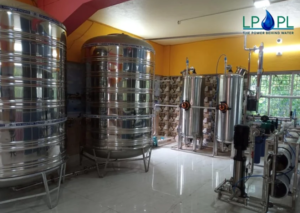
A high-capacity RO plant alone does not guarantee profitability. The entire production line must be balanced. Lalita Projects offers RO systems from 500 LPH to 10,000+ LPH, alongside RFC machines, bottle blowing systems, labelling and packaging equipment.
When water treatment, bottle production, filling and packaging capacities are properly matched, bottlenecks can be reduced and production can run more efficiently.
Higher Output Can Improve Profitability
High-capacity machinery involves greater initial investment, but businesses should evaluate cost per bottle and long-term production potential, rather than focusing only on purchase price. Higher output can spread fixed costs across more units and potentially improve overall margins when there is sufficient market demand.
Lalita Projects specifically highlights reduced labour and operational costs, higher productivity and improved profitability as benefits of its fully automatic PET blowing solutions.
Choose Capacity According to Your Business
High capacity is not automatically the right choice for every entrepreneur. Market demand, available investment, factory space, distribution network and growth plans should all be considered.
Lalita Projects follows a turnkey approach covering site survey, plant design, machinery selection, installation, licensing, commissioning and operator training, helping businesses select a configuration aligned with their requirements.
A high-capacity mineral water plant can be a strategic investment for businesses with sufficient market demand. By combining higher production, automation, efficient manpower utilisation and properly matched machinery, manufacturers can work towards lowering their production cost per bottle and improving profitability. The right technology partner can help ensure that the plant is designed not simply for higher output, but for efficient, scalable and sustainable business growth.